Features of Asphalt Art
Environmental and road arrangements are made using different stones according to the characteristic of the area to be asphalted and the type of ground. During the construction of areas open to traffic, a ground consisting of hot mix asphalt is created. In walking areas and parks closed to traffic, it is preferred to use more colorful and patterned stones. Interlocking stone, which exhibits an elegant and aesthetic appearance, is one of the most used stones today. Cube stone is also frequently used due to its ability to provide a simpler look to the space and its ease of application. In paving and curbing, prism stone, drop stone, slope stone, S stone, square stone, curb, and grass stone are also used. Additionally, rain gutters are made along the edges of roads and sidewalks to prevent water overflow due to heavy rain.
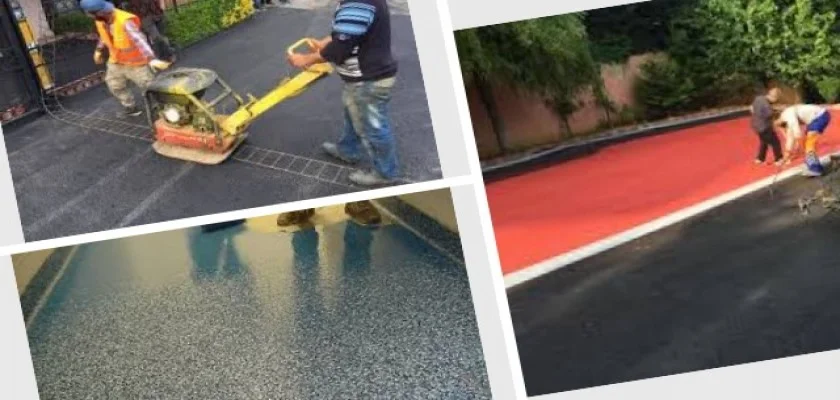
Asphalt paving is done by heating binder materials such as asphalt cement, liquid petroleum asphalt, and tar used in concrete production to a certain temperature until they become fluid, and then pouring the graded aggregate onto the ground. Due to its construction characteristic, it prevents vehicles from skidding by gripping their wheels even on wet surfaces. Hot mix asphalt, which ensures the safe movement of vehicles in traffic, is used carefully during road construction. Due to the flexibility of the ground, subsidence and cracking do not occur in the sub-base.
Application Areas of Epoxy Flooring
Epoxy, made from a two-component resin with the consistency of honey, protects the floor it covers against impacts. Its smooth surface gives the space a modern and stylish look. Epoxy flooring, which does not accumulate dust and is easy to clean, is used during asphalt and road construction. In addition to asphalt paving, it can also be applied in places such as factories, workshops, and warehouses. Due to its hygienic properties, it is used in hospitals and intensive care units. It is also used in areas such as slaughterhouses, printing houses, meat processing plants, bottling plants, and the chemical industry.
Asphalt does not deform due to the effect of static and dynamic energy caused by vehicles on the ground. Furthermore, one of the biggest benefits of asphalt paving is providing fatigue resistance. Vehicles create repeated stresses on the ground they pass over with their loads and weights. Thanks to its ability to bend and expand, asphalt shows high resistance to even the strongest impacts.
www.gunsanasfalt.com