
Religions Accepted by Turks in History

Religions Believed by Turks in Central Asia
Turks are a nation that has believed in many religions throughout history. The religions believed by Turks, in order, are Tengrism, Buddhism, Manichaeism, and Islam. The geography where Turks lived and the nations they were influenced by are among the factors that determined their religion. The majority of the people in Central Asia, the birthplace of the Turks, adopted the belief in Tengri. Tengrism was a religion that believed in a single God. It also contained traditions such as Shamanism. Among the nations living in Central Asia, Turks, Mongols, and Tatars mostly believed in this religion. Influenced by Central Asian culture, Turks who believed in this religion later began to believe in Manichaeism as the Uygurs. Manichaeism was a religion that harmed the true essence of the Turks. According to this religion, eating meat was forbidden. This situation led the Turks, who had a warrior structure, to lose their strength. Losing their power and strength, the Turks began to engage in art after settling down. In ancient nations, the ruler's change of religion automatically led to the people's change of religion over time. Even if the people did not want to change their religion, they had to adapt to the general structure over time. This situation was also observed among the Uygurs. After years of losing their true essence under the influence of Manichaeism, the Turks gradually moved away from this religion. With the fall of the Uyghur state, the number of people who believed in this religion significantly decreased.
The Acceptance of Islam by Turks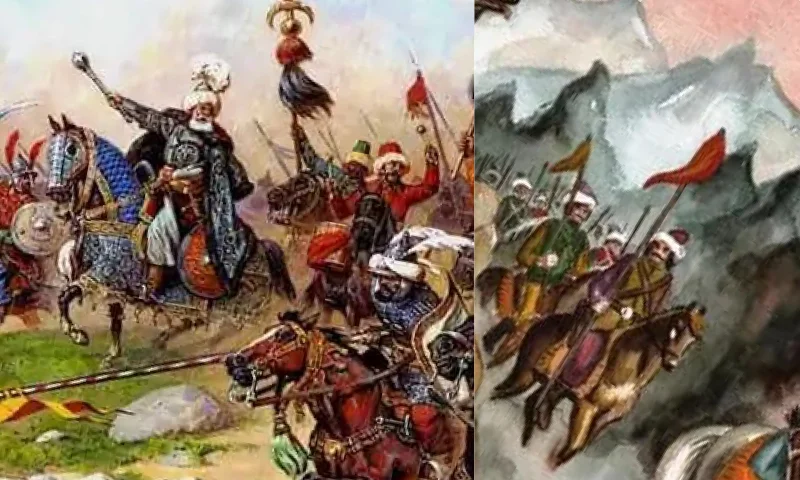
Another religion that Turks believed in and accepted for a very long time is Islam. Islam provided the completion of the missing piece in the hearts of the Turks. Previously, Turks who fought with the passion for world domination fought under the names of gaza and jihad after Islam. One of the main factors that led to the Turks' acceptance of Islam was the belief in a single God in both Islam and Tengrism. This facilitated a more comfortable religious change for the Turks. It is generally thought that the Turks' acceptance of Islam is related to their relations with the Arabs. However, the Iranians also contributed to the Turks' religious change as much as the Arabs. During the Abbasid Caliphate, in the Battle of Talas against the Chinese, the Turks fought alongside the Arabs. The Arabs, benefiting from the superior warrior skills of the Turks, managed to defeat the Chinese. After the war, the Turks and Arabs established close relationships and began to stand together in battles. The Arabs founded cities called Avasim for the Turks and ensured that Turkish Commanders were present in the Arab state. Through this, as these two nations experienced cultural interaction with each other, they eventually shared their religions. The Turks, who slowly became Muslim from the early 700s, began to become Muslim in large masses after the 800s. The first Turkic states to accept Islam were the Khazars and the Karakhanids. Completing the missing piece in their hearts with Islam, the Turks, with their understanding of gaza and jihad, have ruled the world many times over the years.





